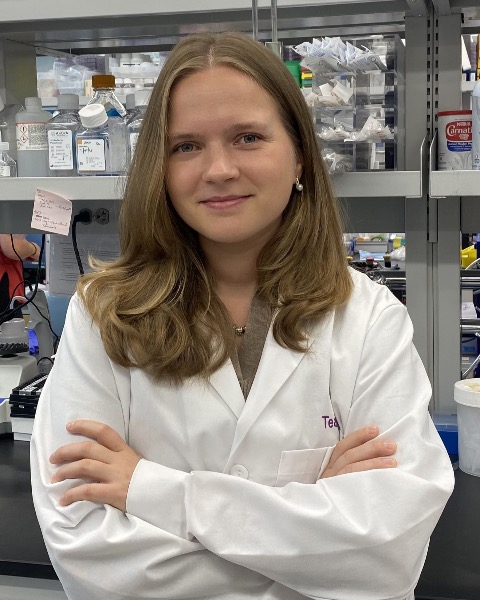
Ph.D. Candidate New York University Grossman School of Medicine New York, New York, United States
Disclosure(s):
Ekaterina Novikova, MD: No relevant disclosure to display
Introduction/Rationale: Despite the life-saving successes of solid organ transplantation, organ demand far exceeds availability. Porcine xenotransplantation, the use of pig organs in humans, holds promise, but acute rejection remains a barrier to long-term xenograft survival.
Methods: To investigate mechanisms of acute xenorejection, we used the first long-term (61-day) human decedent xenotransplantation model at NYU, in which a decedent received a kidney with a thymus autograft (“thymokidney”) from an α-1,3-galactosyltransferase knockout (GGTA1 KO) pig. This unique model allows serial thymokidney biopsies, paired blood draws, lymph node biopsies and exhibited antibody-mediated (AMR) and cellular rejection despite immunosuppression. We performed TCR sequencing on thymokidney biopsies and 5’ CITE-seq of blood. Xenoreactive clonotypes were identified by mixed lymphocyte reaction. We identified clonal families forming over time and across compartments.
Results: Longitudinal analysis of the thymokidney biopsies revealed human CD4 and CD8 T cell responses that formed clonotypic families. Circulating activated T cells increased 2 weeks before rejection, highlighting the potential as a cellular biomarker of rejection. Strikingly, a single xeno-reactive CD8 clonotype expanded dramatically in the blood before rejection and was also identified in the xenograft during rejection. T cell clonotypes were shared across xenograft, blood and lymph nodes and formed clonal families with known xeno-reactive clonotypes, suggesting a coordinated response to a limited set of antigenic targets. Serum CXCL13 and circulating T follicular helper cells increased before AMR, indicating formation of germinal centers which suggests therapeutic opportunities to treat impending rejection.
Conclusion: These findings establish a framework to track coordinated immune responses at cellular, clonal, and clonotypic family levels and identify potential biomarkers of xenorejection, offering new opportunities for early prediction and potential intervention.