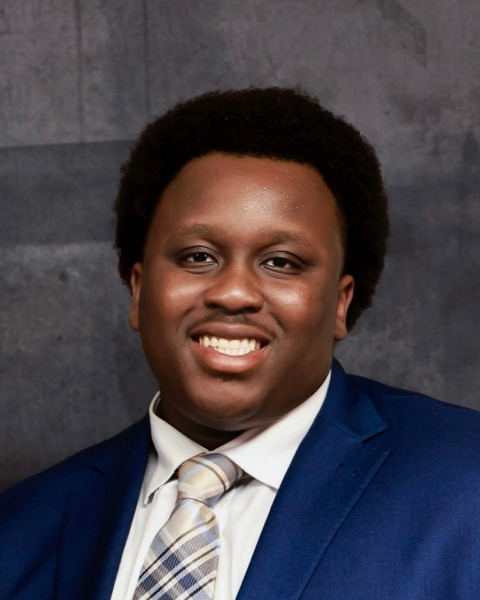
Undergraduate Researcher University of Virginia Charlottesville, Virginia, United States
Disclosure(s):
Osaretin Lawani: No financial relationships to disclose
Introduction/Rationale: Microglia are brain-resident immune cells that have valence on virtually all areas of the cerebral landscape, one locus of particular intrigue being the vasculature. Previous work has detailed robust microglia-vascular interactions in physiology. However, how these interactions are altered during inflammation, particularly respiratory inflammation, remains poorly understood. Here, we demonstrate that respiratory inflammation elicits marked changes in microglial spatial organization and vascular interactions.
Methods: To simulate inflammation, we used intratracheal lipopolysaccharide (IT-LPS) injection. To evaluate microglial response, we quantified capillary-associated microglia (CAM) density, expression of activation and homeostatic markers (CD68 and P2RY12), and microglial emergence, clearance, and migration, a process that can be broadly defined as landscape rearrangement. To assess vascular structure and function, we measured capillary diameter, cerebral blood flow (CBF), tight junction integrity, and blood-brain barrier (BBB) permeability. Ongoing work aims to assess the contribution of microglia to inflammation-associated vascular changes using the Csf1rFIRE mouse model, in which microglia fail to develop.
Results: IT-LPS treatment induced a robust response, evidenced by transient weight loss in treated mice. We observed increased levels of landscape rearrangement and greater densities of CAM. Despite observing no difference in P2RY12 expression, IT-LPS treated mice produced a higher density of CD68⁺ microglia, consistent with a more phagocytic phenotype. These changes coincide with modulations in the vasculature, including reduced capillary diameter and impaired CBF. Further, tight junction integrity was perturbed and BBB permeability increased, indicating compromised vascular structure and function.
Conclusion: By studying these interactions, we hope to uncover novel relationships between microglia and the vasculature relevant for brain function in various pathologies.