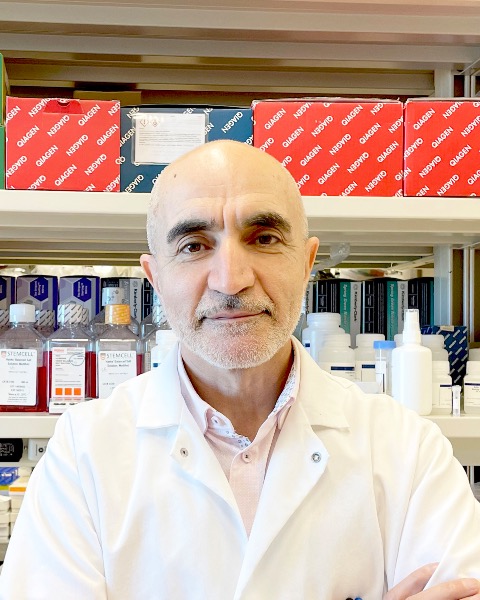
Professor University of Alberta Edmonton, Alberta, Canada
Disclosure(s):
Shokrollah Elahi, MD, PhD: No financial relationships to disclose
Introduction/Rationale: Cyclic adenosine monophosphate (cAMP) is a key intracellular second messenger known to regulate immune responses. However, its presence and functional impact in the extracellular compartment remain poorly understood.
Methods: We quantified plasm levels of cAMP in Chronic lymphocytic leukemia (CLL) patients. We also used bulk and single-cell RNA sequencing, multiplex cytokine profiling, and functional studies to evaluate immunological properties of extracellular cAMP
Results: We found that plasma cAMP levels are significantly elevated in CLL patients compared to healthy controls. Notably, we found a positive correlation between plasma cAMP levels with CLL Rai stage. We demonstrate that extracellular cAMP exerts broad immunomodulatory effects on multiple immune cell subsets, including T cells, natural killer cells, B cells, and monocytes. Extracellular cAMP selectively suppressed the expression of key proinflammatory cytokines, such as TNF-α and IFN-γ and activation markers in both CD4⁺ and CD8⁺ T cells. Prolonged cAMP inhibitory effects can promote T cell exhaustion as evidenced by the expansion of TIM-3, CD160, and PD-1 expressing T cells. This observation was further supported by a positive correlation between plasma cAMP and the frequency effector memory CD8+CD160+PD-1+ T cells in CLL patients. Transcriptomic analyses revealed downregulation of T cell effector genes and transcription factors critical for lineage differentiation and upregulation of T cell exhaustion score. In monocytes, extracellular cAMP induced a distinct transcriptional program characterized by reduced antigen-presenting functions but enhanced secretion of proinflammatory cytokines and neutrophil-recruiting chemokines.
Conclusion: Together, our findings reveal that extracellular cAMP is a potent immune regulator and potential biomarker in CLL. Understanding its mechanistic pathways may offer new therapeutic targets for restoring immune regulation in chronic conditions.