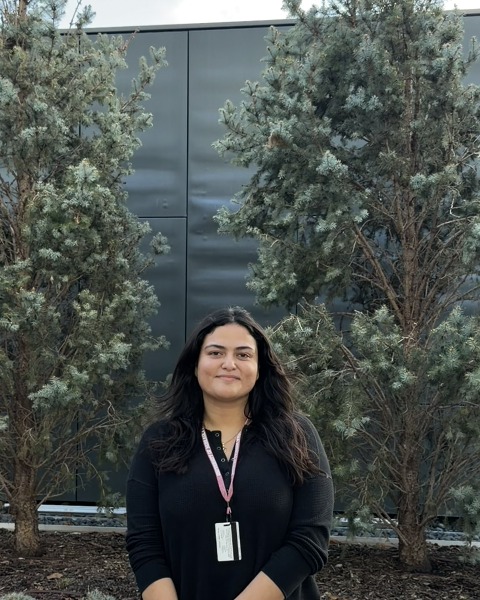
PhD student Univ. of Nebraska Med. Ctr. Omaha, Nebraska, United States
Disclosure(s):
Artha Govind Lotlikar, MSc: No financial relationships to disclose
Introduction/Rationale: Craniotomy, a neurosurgical procedure for treating brain tumors, epilepsy, and cranial bleeds, carries a 1-5% infection risk, often due to Staphylococcus aureus biofilm formation, rendering infections tolerant to antibiotics and immune clearance. Treatment often requires multiple surgeries, heightening patient morbidity. However, the mechanisms driving immune dysfunction and biofilm persistence remain poorly understood. The integrated stress response (ISR), marked by eIF2α phosphorylation (eIF2α-P) and ATF4 induction, coordinates cellular adaptation to stress and was markedly increased in numerous leukocyte infiltrates in our mouse model of S. aureus craniotomy infection. We propose that the ISR is central to infection persistence and immune dysfunction.
Methods: Evidence of ISR activation was assessed by scRNA-seq of mouse and human craniotomy infection tissues and validated by Western blot. Salubrinal (ISR inducer) and ISRIB (inhibitor) were administered during early craniotomy infection to evaluate effects on bacterial clearance and immune activation.
Results: scRNA-seq revealed marked enrichment of ISR-associated transcripts in neutrophils, macrophages, and G-MDSCs. Both eIF2α-P and ATF4 expression were elevated in the brain and galea at day 7 post-infection, coinciding with biofilm formation. During acute infection, salubrinal-mediated ISR activation significantly reduced S. aureus burdens, whereas ISR inhibition enhanced bacterial persistence, suggesting an early protective role for ISR signaling.
Conclusion: These findings identify the ISR as a pivotal regulator of immune dynamics and biofilm persistence. Understanding how stress-adaptive pathways shape leukocyte function may reveal novel immunomodulatory strategies to overcome treatment-refractory biofilm infections.