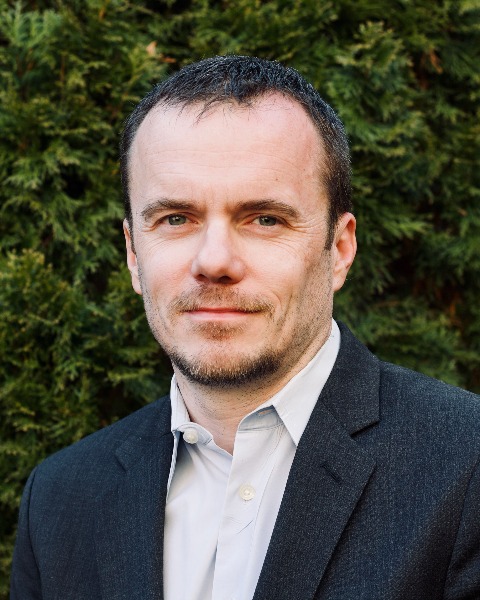
Executive Director Nimbus Therapeutics Boston, Massachusetts, United States
Disclosure(s):
Leon Collis, PhD: No relevant disclosure to display
Introduction/Rationale: Salt-Inducible Kinases (SIKs) amplify proinflammatory gene expression in myeloid cells via phosphorylation of transcriptional coregulators. Genetic loss-of-function (LOF) of SIKs in mice or pan-SIK inhibitors decrease proinflammatory cytokine production induced by toll-like receptor (TLR) agonists or IL-1. Among the three SIK isoforms, SIK2 shows the highest activity in myeloid cells. SIK2 LOF also enhances production of the anti-inflammatory cytokine IL-10, an effect not observed with SIK1 or SIK3 LOF. However, the lack of highly selective SIK2 inhibitors has prevented characterization of pharmacological SIK2 inhibition and its therapeutic potential.
Methods: Using structure-based drug design, we developed first-in-class highly SIK2-selective inhibitors with nanomolar cellular potency, favorable in vitro ADME and off-target profiles, and suitable PK properties to support in vivo evaluation. SIK2 inhibitors were assessed in vitro using differentiated mouse and human myeloid cells and in vivo in LPS challenged mice.
Results: In vitro, potent and selective SIK2 inhibitors reduced proinflammatory cytokines and chemokines in TLR-stimulated mouse and human inflammatory myeloid cells, while upregulating pro-resolution factors, IL-10, amphiregulin, and retaining the phagocytic activity of regulatory macrophages. Transcriptional analysis of SIK2 inhibitor-treated macrophages confirmed dual suppression of inflammatory pathways and concomitant induction of tissue repair pathways. In vivo, SIK2 inhibitors decreased multiple proinflammatory cytokines and increased IL-10 in LPS-challenged mice. This dual mechanism demonstrated by SIK2 inhibitors was not observed with JAK1 or SIK3-selective inhibitors, which only suppressed inflammatory cytokines.
Conclusion: Selective targeting of SIK2 in myeloid cells has the potential to suppress inflammation and promote tissue healing, offering a novel oral therapeutic approach for more complete disease control in autoimmune and inflammatory diseases.